Some sarees are beautiful because of their colours, while others stand out because of the skill behind every thread. A Jamdani saree brings both together. Known for its delicate patterns, lightweight fabric and timeless appeal, it remains a favourite among women who appreciate traditional Indian textiles. Whether you are choosing a saree for a family celebration, a wedding or everyday elegance, understanding the beauty of Jamdani can help you find a piece that suits your personal style.
The History behind Jamdani Sarees
Jamdani carries a rich weaving heritage rooted in Bengal, particularly in the Dhaka region of present-day Bangladesh. The craft flourished under Mughal patronage and became celebrated for its intricate floral and geometric motifs. What makes Jamdani truly distinctive is its unique weaving technique, where skilled artisans manually introduce additional threads to create delicate patterns directly on the loom. This intricate process demands exceptional patience, precision and years of experience. Recognising its cultural significance, traditional Jamdani weaving was inscribed on UNESCO’s Representative List of the Intangible Cultural Heritage of Humanity in 2013.
For those who appreciate this timeless artistry, a handloom Saree Boutique in South Kolkata offers an opportunity to explore the beauty, heritage and craftsmanship of handwoven Jamdani sarees.
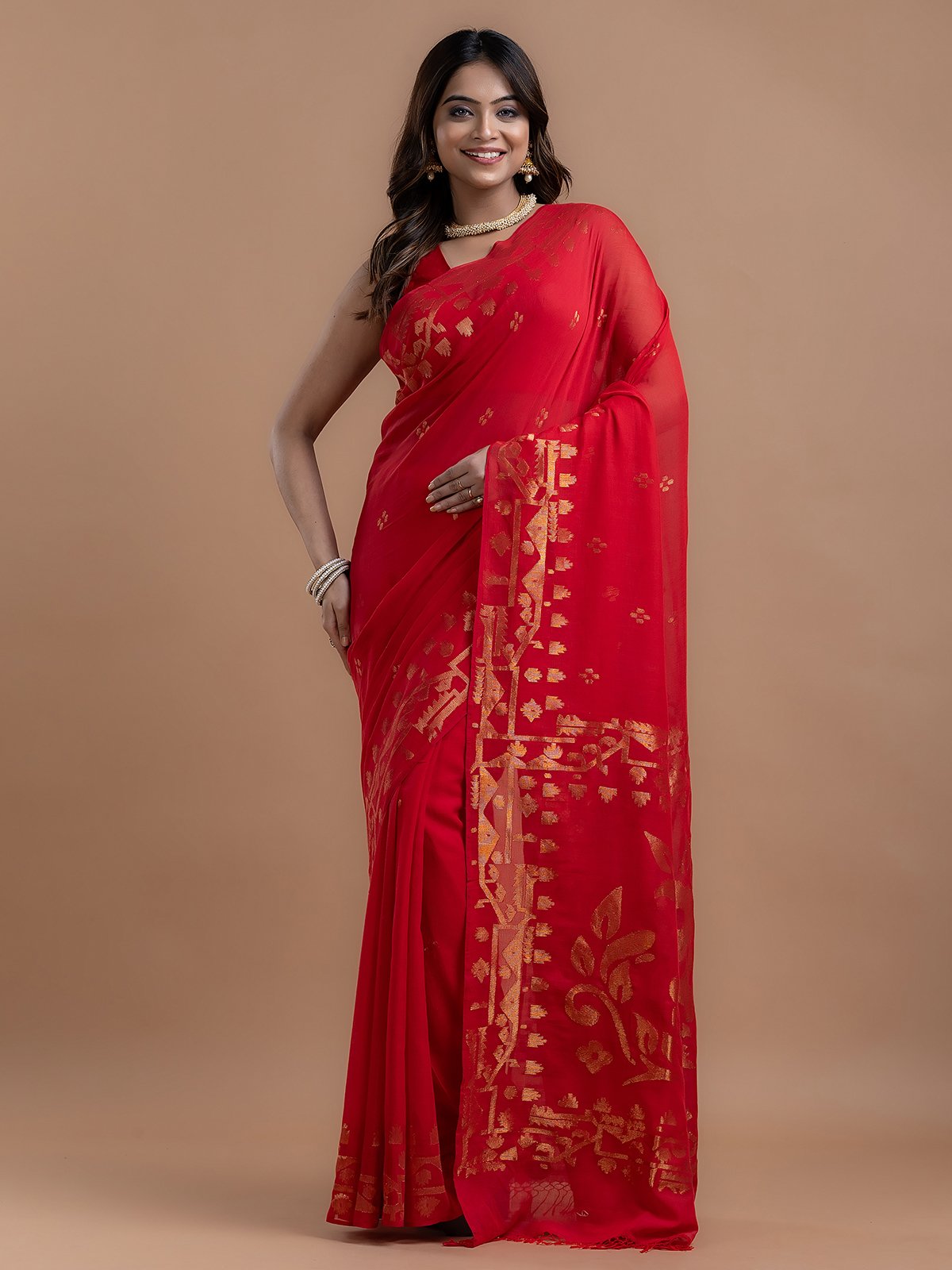
Popular Jamdani Saree Designs and Types
Jamdani sarees come in a variety of patterns, colours and fabric combinations. Here are some popular styles to explore.
1. Butidar Jamdani
This style features small floral motifs scattered across the saree. Its delicate pattern makes it a lovely choice for daytime gatherings and understated festive looks.
2. Floral Jamdani
Inspired by flowers and leaves, floral Jamdani designs bring a soft, graceful quality to traditional dressing. They work beautifully for family occasions and cultural celebrations.
3. Geometric Jamdani
For women who prefer structured patterns, geometric designs offer a distinctive look. Repeated shapes and carefully arranged motifs give these sarees a refined appearance.
4. Jala Jamdani
Jala designs feature patterns spread across much of the saree, creating a richly detailed effect. This style is worth considering when you want a more elaborate traditional look.
5. Cotton Jamdani
Cotton Jamdani sarees are appreciated for their breathable feel and intricate woven motifs. They can be a comfortable option for daytime events, depending on the fabric and weave.
6. Silk and Zari Jamdani
Some Jamdani sarees incorporate silk yarns or zari detailing for a richer finish. These variations can be suitable for weddings, festive occasions and evening celebrations. Design names and fabric combinations can vary, so check the actual weave and material when choosing a saree.
How to Choose the Right Jamdani Saree
Start by thinking about where you plan to wear it. For everyday occasions, a lighter cotton saree with delicate motifs may be a practical choice. For weddings and celebrations, you might prefer a richer colour, an elaborate pallu or zari details. Pay attention to the fabric, the finishing and the overall quality of the weave. Look closely at the motifs and ask about the materials used. A genuine handwoven Jamdani involves considerable craftsmanship, which is part of what makes each piece special. Your blouse also matters. A simple contrast blouse can highlight the saree’s patterns, while a matching blouse creates a more traditional appearance. Choose colours and accessories that complement the weave rather than compete with it.
Find a Saree That Reflects Your Style
A Jamdani saree is more than an occasion wear outfit. It carries generations of weaving knowledge and a design tradition that continues to inspire modern fashion. If you are exploring traditional sarees, visiting a designer boutique in South Kolkata can help you discover styles suited to your taste and occasion. A handloom saree boutique South Kolkata shoppers can explore should offer clear information about fabrics, weaving techniques and care, helping you make a more informed choice. At Soma’s Creations, let your search for traditional elegance begin with an appreciation for the artistry, detail and individuality of handloom textiles.
How to choose whether its handwoven or a powerloom one
Examine the Motifs: Handwoven Jamdani motifs are created by skilled artisans using additional threads during weaving. Slight variations may occur in the patterns, while powerloom designs often appear more uniform. However, this is not a definitive test.
2. Check the Reverse Side: Look at the back of the saree to observe how the motifs are woven. Handwoven Jamdani may show supplementary threads and subtle irregularities. However, finishing techniques vary, so the reverse side alone cannot confirm authenticity.
3. Understand the Craftsmanship: Traditional handwoven Jamdani involves considerable time and skill, particularly for intricate patterns. Powerloom sarees are mechanically produced and can offer consistent designs at more accessible prices.
4. Ask the Seller: The most reliable approach is to ask whether the saree was woven by hand or machine. Enquire about its origin, weaving technique and materials, and look for credible product documentation.
5. Check the Price and Certification: Handwoven Jamdani may cost more because of the labour and expertise involved. Look for relevant authenticity information, such as a verifiable Handloom Mark label. Remember that price and appearance alone cannot establish authenticity.